
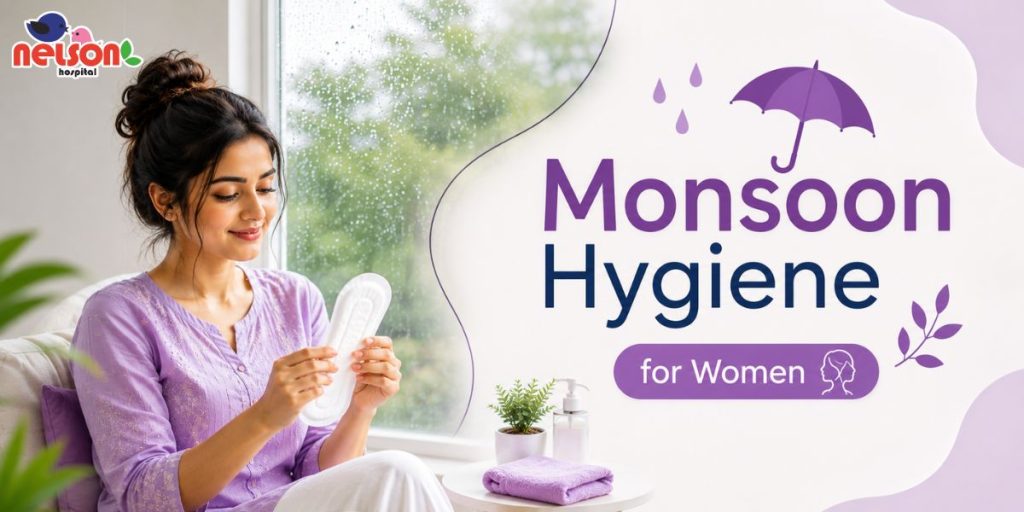
The monsoon season brings relief from the summer heat, but it also creates the perfect environment for bacterial and fungal growth. Increased humidity, damp clothing, and exposure to contaminated water can affect women’s health in several ways. This makes monsoon hygiene for women an important aspect of staying healthy during the rainy season.
Women are particularly vulnerable to skin infections, urinary tract infections (UTIs), fungal infections, and intimate health concerns during monsoon months. By following simple hygiene practices and preventive measures, women can significantly reduce their risk of infections and enjoy the season without compromising their well-being.
At Nelson Hospital, we encourage women to prioritize personal hygiene and reproductive health throughout the monsoon season. Here are some essential tips to help you stay healthy and comfortable.
Why Women's Health Requires Extra Care During Monsoon
The rainy season creates a moist and humid environment that encourages the growth of bacteria, fungi, and other microorganisms. Wet clothes, sweaty skin, and prolonged exposure to damp conditions can increase the likelihood of infections.
Common health concerns among women during monsoon include:
- Fungal skin infections
- Vaginal infections
- Urinary tract infections
- Allergies and skin rashes
- Foot infections
- Digestive illnesses caused by contaminated food and water
Maintaining proper hygiene can help prevent these problems and support overall health.
Intimate Hygiene Tips for Women's Reproductive Health
Keep the Intimate Area Clean and Dry
One of the most important aspects of monsoon hygiene for women is maintaining intimate cleanliness. Excess moisture in the genital area can create favorable conditions for bacterial and fungal growth.
To maintain vaginal health:
- Wash the intimate area with clean water daily.
- Avoid harsh soaps or scented products.
- Gently pat the area dry after bathing.
- Change out of wet clothes as soon as possible.
Proper hygiene helps prevent irritation, itching, and infections.
Choose Breathable Cotton Underwear
Common Causes of Fungal Infection
High humidity and damp conditions make fungal infections more common during the rainy season. Areas such as the underarms, groin, and skin folds are particularly susceptible.
Symptoms may include:
- Itching
- Redness
- Burning sensation
- Skin peeling
- Unpleasant odor
Tips to Reduce Infection Risk
To protect yourself from fungal infections:
- Wear loose-fitting clothing.
- Dry your body thoroughly after bathing.
- Avoid sharing personal towels.
- Keep skin folds clean and dry.
- Seek medical advice if symptoms persist.
Early treatment can prevent the infection from spreading and becoming more severe.
Menstrual Hygiene During the Rainy Season
Importance of Proper Menstrual Care
Maintaining menstrual hygiene becomes even more important during monsoon because increased humidity can promote bacterial growth and discomfort.
Women should:
- Change sanitary pads every 4–6 hours.
- Change tampons as recommended.
- Sterilize menstrual cups properly.
- Wash hands before and after changing menstrual products.
Good menstrual hygiene reduces the risk of infections and helps maintain comfort throughout the menstrual cycle.
Carry Extra Hygiene Supplies
Unexpected rain and travel disruptions may make access to sanitary products difficult. Keeping extra pads, tampons, or menstrual cups in your bag ensures you’re prepared at all times.
Skin Care Tips for Women During Monsoon
Protect Your Skin from Moisture and Pollution
The combination of humidity and environmental pollutants can trigger acne, rashes, and skin infections.
To maintain healthy skin:
- Cleanse your face twice daily.
- Use a gentle, non-comedogenic moisturizer.
- Avoid staying in wet clothes for long periods.
- Wear clean, dry footwear.
A consistent skincare routine can help keep your skin healthy and glowing during the rainy season.
Take Care of Your Feet
Feet are often exposed to muddy water and damp conditions during monsoon. Wet feet can lead to fungal infections and skin irritation.
Protect your feet by:
- Wearing waterproof footwear.
- Washing feet after returning home.
- Drying between the toes thoroughly.
- Applying antifungal powder if recommended by your doctor.
Preventing Urinary Tract Infections (UTIs)
Stay Hydrated During Monsoon
Many women unknowingly reduce their water intake during rainy weather. However, staying hydrated is essential for preventing urinary tract infections.
Drinking adequate water helps flush bacteria from the urinary system and supports overall health.
Maintain Proper Toilet Hygiene
To reduce the risk of UTIs:
- Always wipe from front to back.
- Avoid holding urine for extended periods.
- Wear clean and dry undergarments.
- Practice proper hand hygiene.
If you experience burning urination, pelvic pain, or frequent urination, consult a healthcare provider promptly.
Healthy Eating Habits for Monsoon Wellness
Focus on Immunity-Boosting Foods
A strong immune system helps the body fight seasonal infections. Include nutrient-rich foods such as:
- Fresh fruits and vegetables
- Citrus fruits rich in Vitamin C
- Yogurt and probiotic foods
- Nuts and seeds
- Whole grains
Avoid consuming unhygienic street food or contaminated water, which may increase the risk of gastrointestinal infections.
When Should You Consult a Doctor?
While many monsoon-related health concerns can be prevented through proper hygiene, medical attention may be necessary if you experience:
- Persistent itching or vaginal discharge
- Skin infections that do not improve
- Symptoms of a urinary tract infection
- Severe menstrual discomfort
- Fever accompanied by infection symptoms
Early diagnosis and treatment can prevent complications and ensure better health outcomes.
Conclusion
Monsoon hygiene for women is essential for preventing infections, maintaining reproductive health, and supporting overall well-being during the rainy season. Simple practices such as keeping the body dry, maintaining intimate hygiene, following proper menstrual care, and staying hydrated can make a significant difference.
At Nelson Hospital, our women’s health specialists are committed to helping women stay healthy throughout every season. If you experience any health concerns during the monsoon, consult our experts for personalized care and professional guidance.
Frequently Asked Questions
High humidity, sweat, and damp clothing create an ideal environment for fungal growth, increasing the risk of skin and intimate infections
Women should keep the intimate area clean and dry, wear cotton underwear, avoid scented products, and change out of wet clothes promptly.
Yes. Increased moisture, poor hygiene, and inadequate hydration can contribute to urinary tract infections during monsoon.
Pads should generally be changed every 4–6 hours or more frequently if needed to maintain proper menstrual hygiene.
Fresh fruits, vegetables, yogurt, nuts, seeds, and Vitamin C-rich foods can help strengthen immunity and protect against seasonal illnesses.
Consult a doctor if you experience persistent itching, abnormal vaginal discharge, burning urination, skin rashes, fever, or symptoms that do not improve with basic care.
Book an Appointment