

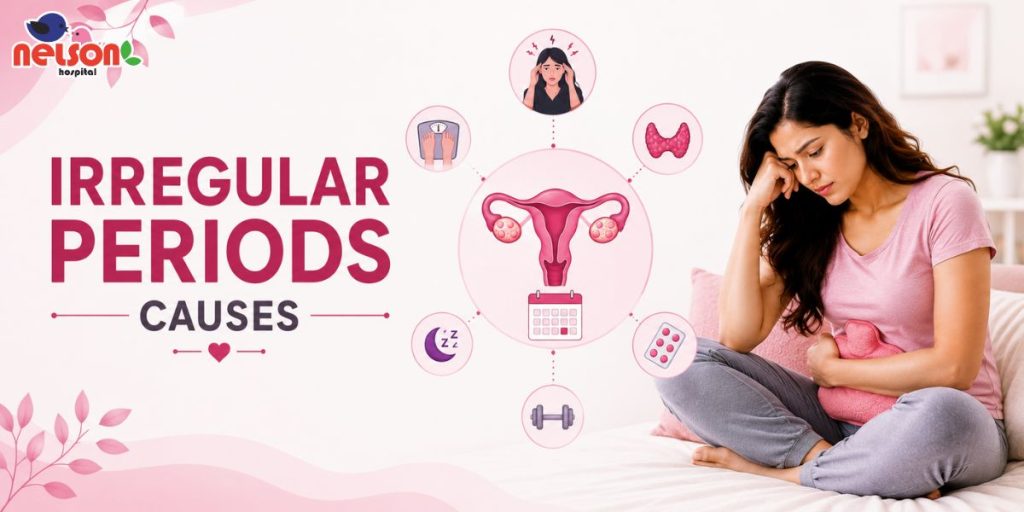
A regular menstrual cycle is often an important indicator of a woman’s reproductive health. While occasional changes in cycle length can be normal, frequent or persistent irregularities may signal an underlying health condition. Understanding irregular periods causes can help women seek timely medical attention and maintain overall well-being.
At Nelson Hospital, we regularly help women identify the root causes of menstrual irregularities and provide personalized treatment plans to restore hormonal balance and reproductive health.
What Are Irregular Periods?
A menstrual cycle typically occurs every 21 to 35 days and lasts between 2 to 7 days. Irregular periods refer to menstrual cycles that vary significantly in timing, duration, or flow.
Some common examples include:
- Missing periods for several months
- Periods occurring too frequently
- Cycles longer than 35 days
- Unusually heavy or light bleeding
- Unpredictable menstrual patterns
While occasional irregularities may not be a cause for concern, recurring changes should be evaluated by a healthcare professional.
Common Irregular Periods Causes
Several factors can affect the menstrual cycle. Some causes are temporary, while others may require medical treatment
Hormonal Imbalance and Menstrual Irregularities
Hormones play a crucial role in regulating the menstrual cycle. When hormone levels fluctuate, ovulation may become irregular, leading to missed or delayed periods.
Hormonal imbalances can result from:
- Stress
- Thyroid disorders
- Polycystic Ovary Syndrome (PCOS)
- Certain medications
Maintaining hormonal balance is essential for regular menstrual function.
PCOS and Irregular Periods
Polycystic Ovary Syndrome (PCOS) is one of the leading causes of irregular periods in women of reproductive age. PCOS affects hormone production and ovulation, often causing infrequent or absent periods.
Women with PCOS may also experience:
- Weight gain
- Acne
- Excess facial or body hair
- Fertility challenges
Early diagnosis can help manage symptoms effectively and reduce long-term health risks.
Stress and Lifestyle Factors Affecting Menstrual Cycles
Physical and emotional stress can disrupt hormone production, impacting the menstrual cycle. High stress levels may delay ovulation or cause missed periods altogether.
Other lifestyle-related causes include:
- Poor sleep habits
- Excessive exercise
- Sudden weight loss
- Unhealthy eating patterns
Adopting healthy lifestyle habits can significantly improve menstrual regularity
Thyroid Disorders and Abnormal Menstrual Cycles
The thyroid gland regulates many bodily functions, including metabolism and hormone balance. Both hypothyroidism and hyperthyroidism can affect menstrual cycles.
Women with thyroid-related menstrual issues may notice:
- Irregular bleeding
- Heavy periods
- Missed periods
- Fatigue and weight changes
Proper diagnosis and treatment of thyroid conditions often restore menstrual regularity.
Weight Changes and Reproductive Health
Significant weight gain or weight loss can disrupt hormone production and ovulation.
Low body weight may reduce estrogen levels, while obesity can lead to increased estrogen production, both of which can interfere with normal menstrual cycles.
Maintaining a healthy weight supports better reproductive health and hormonal balance.
PCOS Fertility Treatment Options
Women trying to conceive may benefit from fertility-focused treatments. Ovulation-inducing medications and specialized reproductive care can significantly increase the chances of pregnancy.
Early consultation with a gynecologist can help identify the most effective fertility treatment plan.
Other Medical Conditions Linked to Irregular Periods
Several health conditions can contribute to menstrual irregularities, including:
Endometriosis
A condition where tissue similar to the uterine lining grows outside the uterus, causing painful and irregular periods.
Uterine Fibroids
Non-cancerous growths in the uterus can result in heavy or prolonged bleeding.
Pelvic Inflammatory Disease (PID)
An infection of the reproductive organs that may affect menstrual regularity and fertility.
Premature Ovarian Insufficiency
This condition occurs when ovarian function declines before the age of 40, leading to irregular or absent periods.
Symptoms That Should Not Be Ignored
While irregular periods are common, certain symptoms require medical evaluation:
- Missing periods for more than three months
- Extremely heavy bleeding
- Severe menstrual pain
- Bleeding between periods
- Dizziness or fatigue due to blood loss
- Difficulty conceiving
Prompt medical attention can help identify underlying causes and prevent complications.
Diagnosis of Irregular Menstrual Cycles
To determine the cause of irregular periods, a gynecologist may recommend:
- Detailed medical history review
- Physical examination
- Hormone level blood tests
- Thyroid function tests
- Pelvic ultrasound
- Additional reproductive health evaluations
An accurate diagnosis allows for targeted treatment and better long-term outcomes.
Treatment Options for Irregular Periods
Treatment depends on the underlying cause of the menstrual irregularity.
Lifestyle Modifications
For many women, simple lifestyle changes can improve menstrual health:
- Regular exercise
- Balanced nutrition
- Stress management
- Healthy sleep routine
- Weight management
Hormonal Treatments
Hormonal medications may help regulate menstrual cycles and restore ovulation when hormone imbalances are present.
Managing Underlying Medical Conditions
Treating conditions such as PCOS, thyroid disorders, fibroids, or endometriosis often helps normalize menstrual cycles.
A personalized treatment plan developed by an experienced gynecologist provides the best results.
When to Consult a Gynecologist
You should consult a healthcare professional if your periods become consistently irregular, unusually heavy, or stop unexpectedly. Early diagnosis can help identify health concerns before they become more serious.
At Nelson Hospital, our specialists provide comprehensive women’s healthcare services, including menstrual disorder diagnosis, hormone evaluations, fertility counseling, and personalized treatment plans.
Conclusion
Understanding irregular periods causes is essential for maintaining reproductive and overall health. While occasional cycle changes are normal, persistent irregularities can indicate hormonal imbalances, PCOS, thyroid disorders, or other medical conditions.
Seeking timely medical advice can help identify the root cause and ensure appropriate treatment. If you are experiencing irregular menstrual cycles, the expert gynecology team at Nelson Hospital is here to support you with compassionate and comprehensive care
Frequently Asked Questions
The most common causes include hormonal imbalance, PCOS, stress, thyroid disorders, significant weight changes, and certain medical conditions.
Yes. Physical and emotional stress can affect hormone levels and disrupt ovulation, leading to delayed or missed periods.
Irregular periods are one of the most common symptoms of PCOS, but they can also occur due to other health conditions.
You should consult a doctor if you miss periods for several months, experience very heavy bleeding, severe pain, or have difficulty getting pregnant.
For women whose irregular periods are linked to obesity or PCOS, healthy weight loss may help restore hormonal balance and improve menstrual regularity.
Yes. Irregular ovulation can make conception more difficult. However, many women achieve successful pregnancies with proper diagnosis and treatment.
Book an Appointment