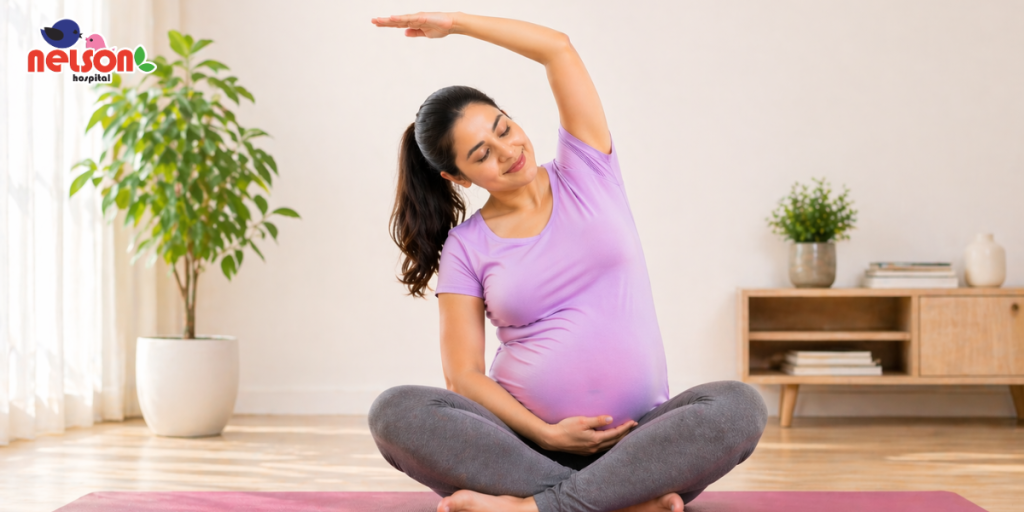
Pregnancy brings many emotional and physical changes. During this time, staying active is essential for both the mother and the baby’s well-being.
Many women feel unsure or worried about exercising during pregnancy. However, with the right guidance, safe physical activity can help strengthen the body, reduce stress, and prepare for a smoother childbirth experience.
Why Exercise is Important During Pregnancy
Regular exercise during pregnancy offers multiple health benefits. It helps improve blood circulation, maintain a healthy weight, and reduce common discomforts such as back pain and fatigue.
Beyond physical health, exercise also supports:
- Better mood and reduced stress
- Improved sleep quality
- Increased stamina for labor
- Faster recovery after delivery
Safe Exercises During Pregnancy
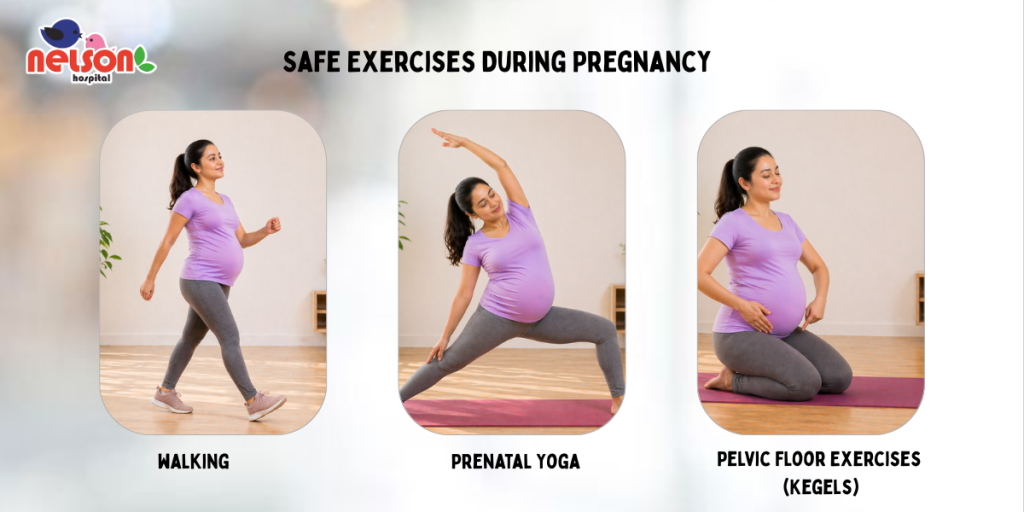
During pregnancy, it is important to focus on low-impact and safe exercises that do not put excessive strain on the body.
1. Walking
Walking is one of the safest and easiest exercises for pregnant women. It supports heart health and is gentle on the joints.
A daily walk of 20–30 minutes can help maintain fitness and boost energy levels.
2. Prenatal Yoga
Prenatal yoga improves flexibility, breathing, and relaxation. It helps reduce stress and prepares the body for labor.
It is also beneficial for improving posture and relieving back pain.
3. Swimming
Swimming is an excellent full-body workout. It supports body weight and reduces pressure on joints, making movement easier and more comfortable during pregnancy.
4. Pelvic Floor Exercises (Kegels)
Kegel exercises help strengthen the pelvic muscles, which play a key role during childbirth.
Regular practice can support easier delivery and faster postnatal recovery.
5. Light Stretching
Stretching helps relieve muscle tension, improve flexibility, and prevent cramps. It also keeps the body relaxed and comfortable.
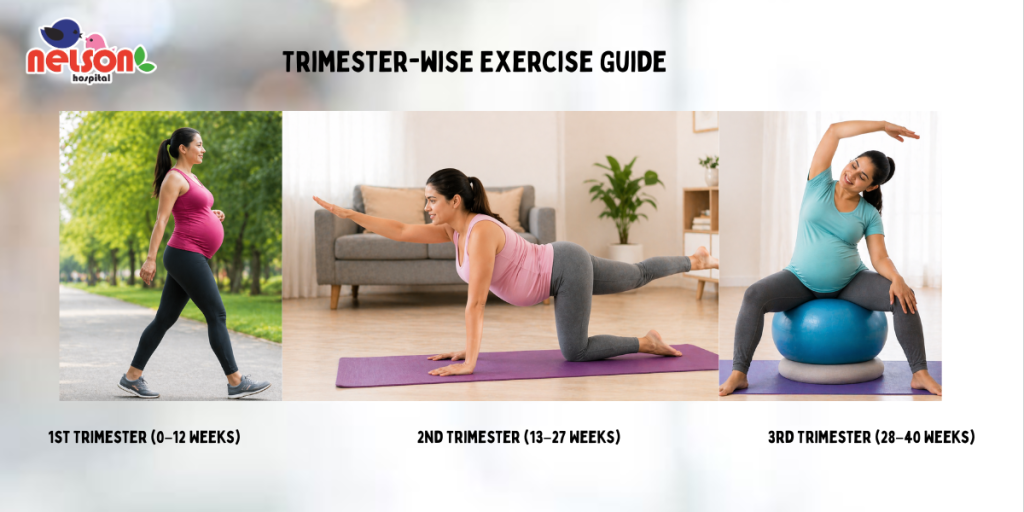
Trimester-wise Exercise Guide First Trimester (0–3 Months)
During the first trimester, hormonal changes can cause fatigue and discomfort.
- Focus on light activities such as walking and gentle yoga
- Avoid intense workouts
- Stay hydrated and listen to your body
Second Trimester (4–6 Months)
This is usually the most comfortable phase of pregnancy.
- Continue walking, yoga, and swimming
- Add light strength exercises if recommended
- Maintain proper posture to avoid strain
Third Trimester (7–9 Months)
As the baby grows, movement may become more limited.
- Focus on breathing exercises and gentle stretching
- Avoid physically demanding activities
- Practice relaxation techniques to prepare for labor
What Exercises Should Be Avoided in Pregnancy?
Certain activities can be risky and should be avoided during pregnancy:
- High-impact workouts like running or jumping on hard surfaces
- Heavy weightlifting
- Exercises that require lying flat on the back for long periods
- Contact sports or activities with a risk of falling
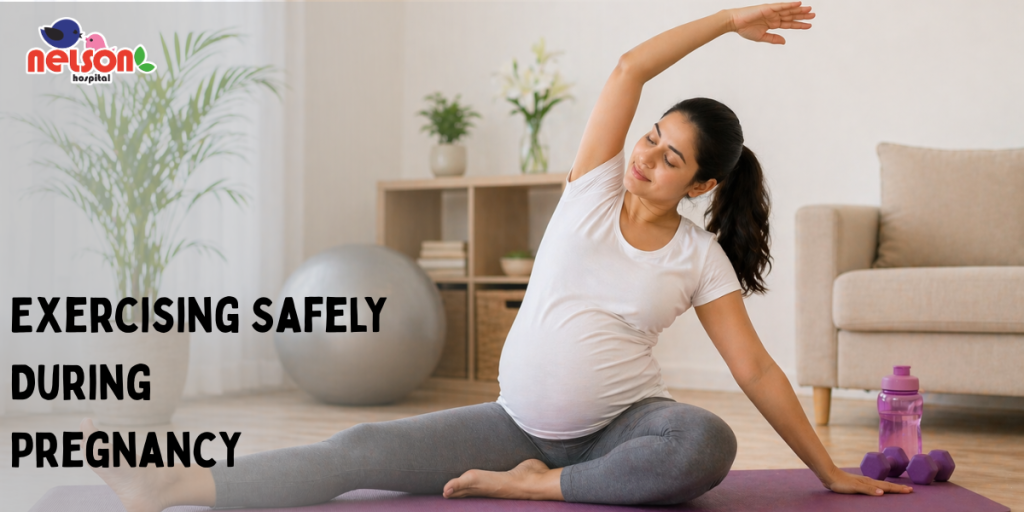
Exercising Safely During Pregnancy
Follow these essential tips to stay safe while exercising:
- Always consult your doctor before starting any exercise routine
- Avoid overexertion and take breaks when needed
- Wear comfortable clothing and supportive footwear
- Drink plenty of water to stay hydrated
- Stop immediately if you feel dizziness, pain, or discomfort
When Should You Avoid Exercise?
Exercise may not be recommended in certain conditions, such as:
- High-risk pregnancy
- Severe anemia
- Heart or lung-related conditions
- Risk of preterm labor
Emotional and Mental Benefits of Exercise
Exercise during pregnancy is not just about physical fitness—it also supports mental well-being.Staying active can help reduce anxiety, improve mood, and create a sense of control and confidence throughout pregnancy. Many women feel more positive and emotionally balanced when they maintain a regular exercise routine.
Conclusion
Exercise during pregnancy is safe and highly beneficial when done correctly. Activities like walking, yoga, swimming, and stretching can improve both physical and emotional health.However, every pregnancy is unique. It is important to listen to your body and follow medical guidance.A balanced and mindful approach to exercise can help ensure a healthier pregnancy, smoother delivery, and faster recovery.
Book an Appointment