

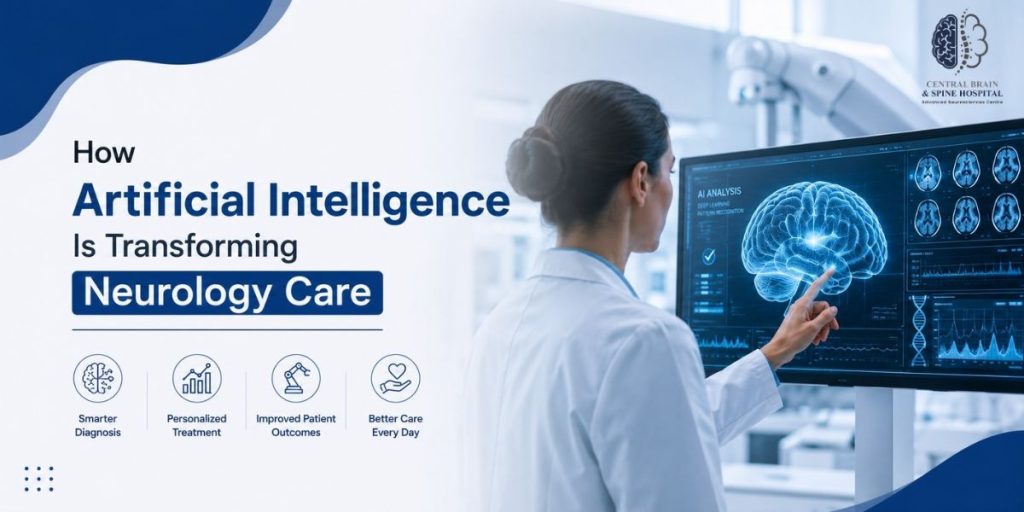
The healthcare industry is experiencing a remarkable technological revolution, and neurology is one of the specialties benefiting the most from these advancements. Artificial Intelligence (AI) is transforming the way neurological conditions are diagnosed, monitored, and treated. From detecting early signs of brain disorders to helping doctors make faster and more accurate decisions, AI is reshaping the future of neurological care.
At Nelson Hospital, we believe in embracing innovative technologies that enhance patient outcomes and support medical professionals in delivering the highest standard of care. Let’s explore how artificial intelligence is revolutionizing neurology and improving the lives of patients worldwide.
AI in Neurological Diagnosis: Improving Accuracy and Speed
One of the most significant contributions of artificial intelligence in neurology care is its ability to improve diagnostic accuracy. Neurological disorders such as Alzheimer’s disease, Parkinson’s disease, epilepsy, and stroke often present complex symptoms that can be difficult to identify in the early stages.
AI-powered systems can analyze medical images, including MRI and CT scans, with remarkable precision. These tools can detect subtle abnormalities that may not be immediately visible to the human eye. As a result, neurologists can diagnose conditions earlier and begin treatment sooner.
Early diagnosis is particularly important for progressive neurological diseases because timely intervention can help slow disease progression and improve quality of life.
Machine Learning in Brain Disorder Detection
Machine learning, a branch of artificial intelligence, enables computer systems to learn from large datasets and recognize patterns. In neurology, machine learning algorithms are trained using thousands of patient records, brain scans, and clinical reports.
These systems can identify patterns associated with various neurological disorders and assist healthcare professionals in making informed decisions. For example, machine learning models can predict the likelihood of a patient developing Alzheimer’s disease years before symptoms become severe.
This predictive capability allows doctors to create proactive treatment plans and recommend lifestyle modifications that may help delay disease progression.
Personalized Neurology Treatment with Artificial Intelligence
Every patient experiences neurological conditions differently. Traditional treatment approaches often rely on generalized protocols, but AI is making personalized medicine a reality.
Artificial intelligence can analyze a patient’s medical history, genetic information, lifestyle factors, and treatment responses to develop customized care plans. This personalized approach helps neurologists select the most effective therapies while minimizing potential side effects.
By tailoring treatments to individual patients, healthcare providers can improve outcomes and enhance patient satisfaction.
Advanced Stroke Management Through AI Technology
Stroke is a medical emergency where every minute matters. Quick diagnosis and treatment can significantly reduce the risk of permanent brain damage.
AI-powered diagnostic tools can rapidly analyze brain imaging scans and identify stroke-related abnormalities within minutes. These systems help emergency teams determine the type of stroke and recommend the most appropriate treatment pathway.
As a result, patients receive faster interventions, improving recovery rates and reducing long-term disabilities. AI is becoming an invaluable tool in stroke management and emergency neurology care.
Predictive Analytics for Neurological Disease Prevention
Preventive healthcare is gaining importance across all medical specialties, and neurology is no exception. Artificial intelligence can evaluate vast amounts of patient data to identify individuals at higher risk of developing neurological disorders.
Predictive analytics can assess factors such as genetics, family history, medical conditions, and lifestyle habits. Neurologists can then recommend preventive strategies, regular screenings, and early interventions to reduce risk.
This proactive approach not only improves patient health but also helps reduce the overall burden of neurological diseases on healthcare systems.
AI-Powered Monitoring for Better Patient Care
Continuous monitoring plays a crucial role in managing chronic neurological conditions. Wearable devices integrated with AI technology can track patient movements, sleep patterns, cognitive performance, and other health indicators in real time.
For patients with Parkinson’s disease, epilepsy, or multiple sclerosis, these devices provide valuable insights that help healthcare providers monitor disease progression and treatment effectiveness.
Remote monitoring also reduces the need for frequent hospital visits while ensuring patients receive timely medical attention when needed.
Enhancing Clinical Decision-Making in Neurology
Neurologists often need to analyze large volumes of clinical information before making treatment decisions. Artificial intelligence helps simplify this process by organizing and interpreting complex data quickly.
AI-driven decision support systems can provide evidence-based recommendations, identify potential treatment options, and highlight relevant patient information. While AI does not replace medical expertise, it serves as a powerful support tool that enhances clinical decision-making.
This collaboration between technology and healthcare professionals leads to more accurate diagnoses and improved patient care.
The Future of Artificial Intelligence in Neurology
The future of AI in neurology care looks incredibly promising. Researchers continue to develop advanced algorithms capable of identifying neurological diseases at earlier stages and predicting treatment outcomes with greater accuracy.
Emerging technologies such as deep learning, robotic-assisted rehabilitation, and AI-driven drug discovery are expected to further transform neurological healthcare. As these innovations become more accessible, patients can expect faster diagnoses, more personalized treatments, and better overall outcomes.
Conclusion
Artificial intelligence is revolutionizing neurology care by improving diagnostic accuracy, enabling personalized treatments, supporting stroke management, and enhancing patient monitoring. As technology continues to evolve, AI will play an increasingly important role in helping neurologists deliver more efficient and effective care.
At Nelson Hospital, we are committed to staying at the forefront of medical innovation and leveraging advanced technologies to provide exceptional neurological care. By combining expert medical knowledge with cutting-edge AI solutions, we aim to improve patient outcomes and create a healthier future for our community.
Book an Appointment